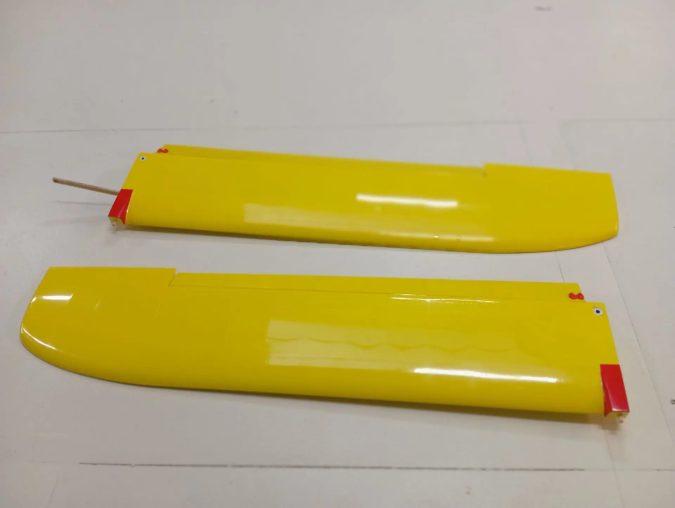
1. The first stage is gluing four 1.5mm plates into two plates.Standard 100mm balsa strips aren’t wide enough to cover the whole chord in one piece. We start by sorting four 1.5mm balsa sheets on the workbench, trying to keep the grain density as close as possible. You run a fresh blade along the long … Continue reading “Manufacture of wings for Tandem”
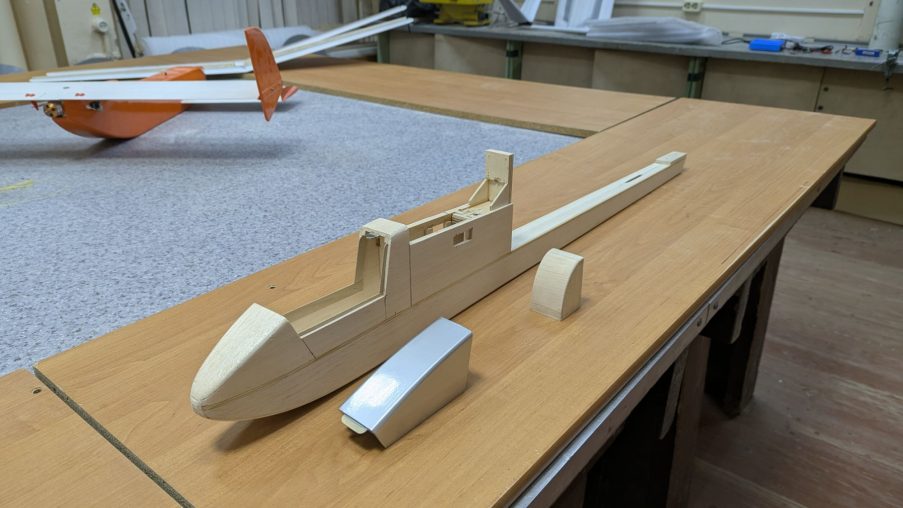
Building a wooden fuselage from scratch looks intimidating if you have only ever bought foam planes. It really isn’t. You are basically putting together a long, light balsa box that needs to survive belly landings in rough grass without snapping in half[cite: 2]. Before we get to the finished wooden shell sitting on the bench … Continue reading “Fuselage manufacturing”
2.The keel is made in two copies from 5mm balsa. To stabilize the structure, a lining and 1mm plywood are glued onto the epoxy resin. 3. After covering the two keels with film and painting the tips, they are finally ready.
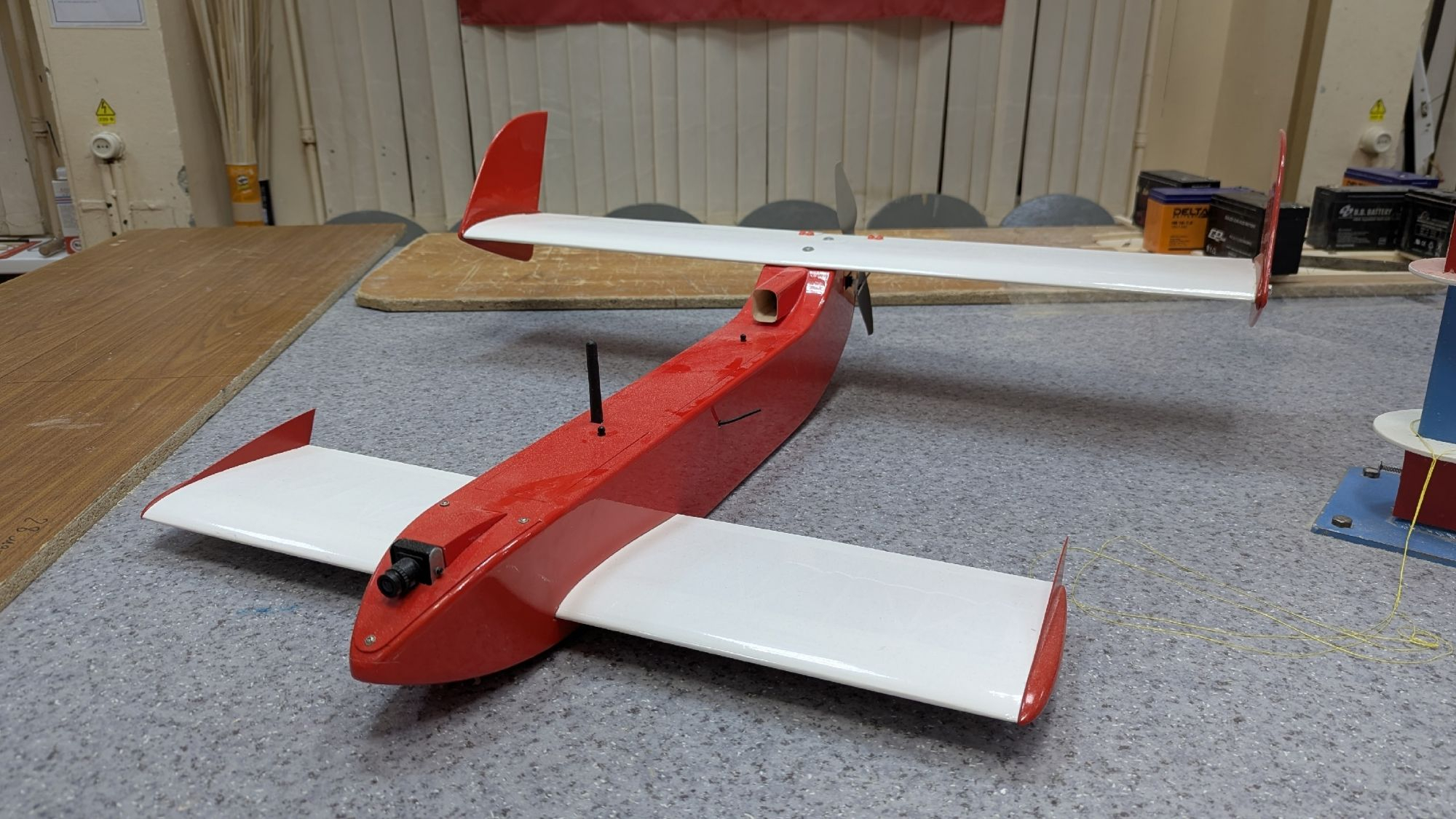
2. After covering, the aircraft model already has a finished look.
Why bother with a tandem-wing plane? Simple. Most standard RC planes force a nasty trade-off: you either get a massive wingspan that won’t fit in your car, or a small wing that drops like a rock when you load it with heavy gear. A tandem setup fixes that. By splitting the wing area into two … Continue reading “Why choose tandem”
To begin, a long ski was created from pine slats and 4mm balsa. The design was sculpted with a tip that curved outward into a teardrop shape. We needed the shape of the ski so that the model could take off without landing gear. Two frames were raised from the ski base, one of which … Continue reading “Creating the fuselage.”
First, we need to make a plate that will serve as the base for the wing structure. Each individual plate is glued together for each snout client. All the wing components will then be attached to this plate. Next, the wing struts, slats, aileron plate, and part of the nose are glued to the plate … Continue reading “Making wings for the Pelican model.”
This project was completed as part of a technical brief. It is made from 3mm-thick balsa wood and glued with cyanoacrylate adhesive. It is a model of a rotating Ferris wheel.