
 Written by
Why bother with a tandem-wing plane? Simple. Most standard RC planes force a nasty trade-off: you either get a massive wingspan that won’t fit in your car, or a small wing that drops like a rock when you load it with heavy gear. A tandem setup fixes that. By splitting the wing area into two separate lifting surfaces—one up front, one in the back—you get crazy lift in a short, boxy package. It isn’t built to look like a sleek fighter jet. It’s a pure flying truck made for guys who want long flight times, zero stall drama, and tons of room inside for FPV electronics.
You can’t really buy these at a local toy store ready-to-fly. Building a wood or composite frame like the ones on our bench usually costs around $120 to $300 bucks just for the bare bones. That gets you the airframe itself. Motors, servos, flight controllers, and cameras? You buy those separately depending on what you actually want the plane to do.
Main Specs & Setup Details (What to expect):
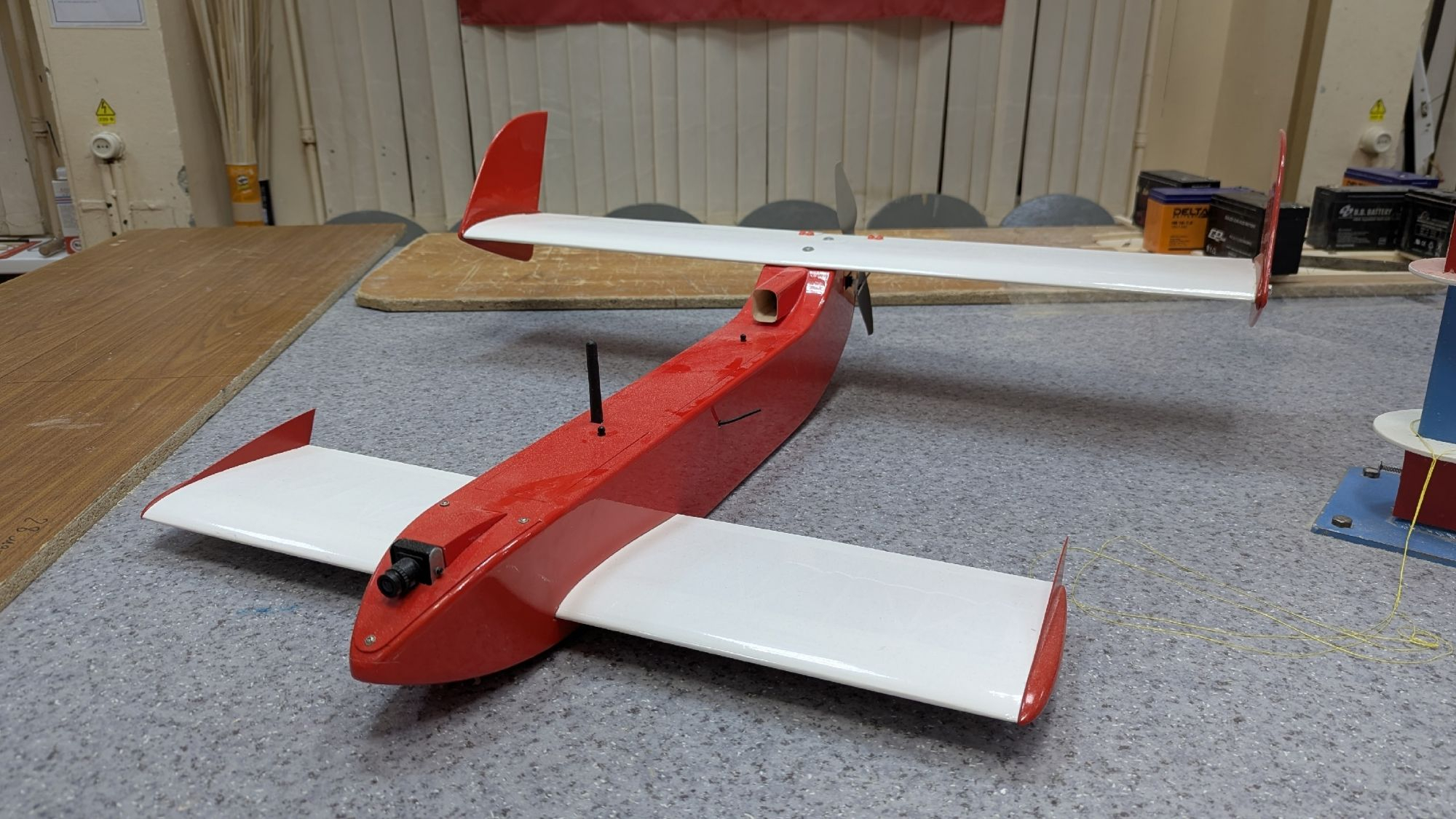
- Wings: Two main wings instead of one giant span (low front wing, high rear wing with vertical fins on the tips).
- Motor config: Rear-mounted single pusher. Mounting it out back means you won’t trash the nosecone on a rough landing.
- Cruise Speed: You’ll usually hover right around 40 mph (about 65 km/h), though a heavy battery will naturally shave off a couple of miles per hour.
- Flight Time: Staying up for 40 minutes is pretty standard. But if you stuff the fuselage with a custom Li-Ion pack, stretching missions past the 90-minute mark is totally doable.
- Size: Usually around 45 inches (115 cm) from wingtip to wingtip. Fits on the back seat of any normal sedan without taking the wings off.
- Payload room: Huge. The red fuselage here swallows a flight controller, VTX, GPS, and big battery packs without cramming wires together.
- Camera spot: Built-in nose mount right out front.
Top Speed:
- On paper: Maybe 65–70 mph if you point the nose down and gun the throttle.
- In real life: Nobody flies these fast. They cruise best around 40 mph. Try pushing full throttle the whole time and you’ll just fight the drag from having two thick wings, draining your battery for nothing.
Altitude & Range:
- Line of sight: 400 feet up is plenty when you’re just standing at the field watching it from the ground.
- FPV flying: Put on the goggles, though, and this thing will climb as high and fly as far as your radio link allows (and local laws let you get away with). It cuts through bumpy air high up way better than a light foam glider.
What Goes Into The Airframe: Looking at our finished red model, the whole concept is dead simple. You have the main box fuselage—basically a flying cargo container. Up front sits the nose camera with zero propeller blades blocking the lens. Both wings have upturned tips (winglets) to stop the plane from sliding sideways in turns. And tucked right behind the top wing is the prop, chewing up the air safely away from your fingers and camera gear.
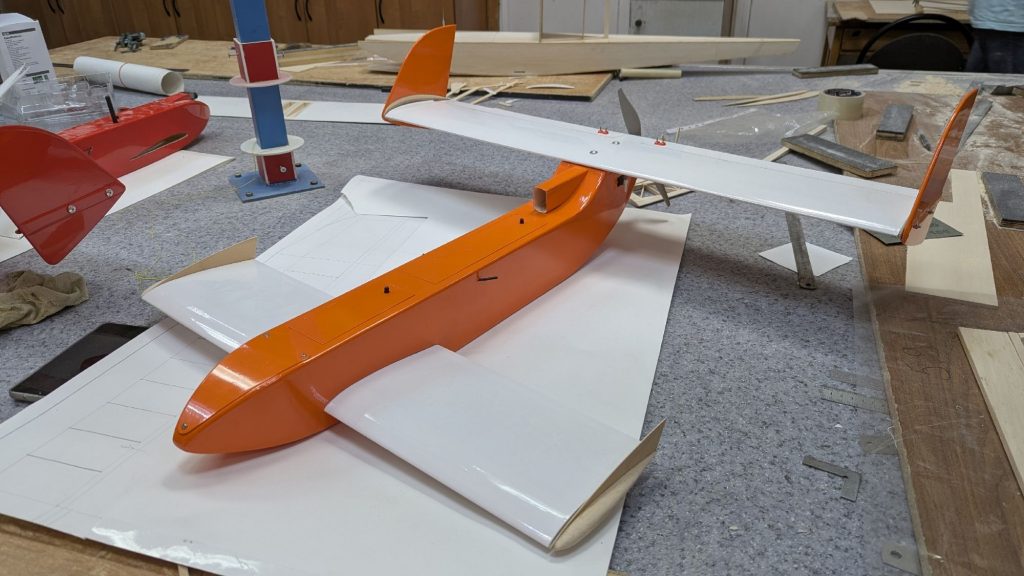
Build Quality and Weight: Take a look at the orange airframe sitting on the shop table. There’s nothing fragile about it. Because the wings are short and stubby compared to a normal sailplane, they don’t bend or flutter when the plane gets heavy. You can load it up to 5 or 6 pounds without sweating it. Hand-launching takes a solid throw, sure, but once it’s in the air, both wings grab the wind right away.
Propeller & Motor Placement: Using a pusher prop in the rear does two big favors for the pilot. First, no black lines spinning across your video feed. Second, when you belly-land in tall grass (because there’s no landing gear to snap off), the propeller sits high up out of the dirt.
Camera Setup: Notice the difference between our two builds. The red one has an FPV camera bolted straight onto the nose cone. The orange one is left totally slick up front.
How People Actually Fly Them (Flight Modes):
- Manual Cruise: Just basic stick-and-rudder flying. Very chill. Yank the elevator stick back too far and lose your airspeed? No big deal. It won’t ever snap into a nasty spin. The nose simply nods down a bit. That lets it catch some air and level out all by itself.
- Autopilot / Waypoints: Nine times out of ten, you’ll see an INAV or ArduPilot board sitting inside the fuselage.
Final Verdict: A tandem-wing plane isn’t for showing off fast low passes at the local club. It’s a tool. If your goal is packing a big battery, flying far out over the horizon with a clean camera view, and bringing the plane back in one piece even when the wind picks up—this setup beats a traditional airplane hands down.
Muhammad Ismail Adamu
Muhammad
Election
Good work keep it up
Okay.