 Written by
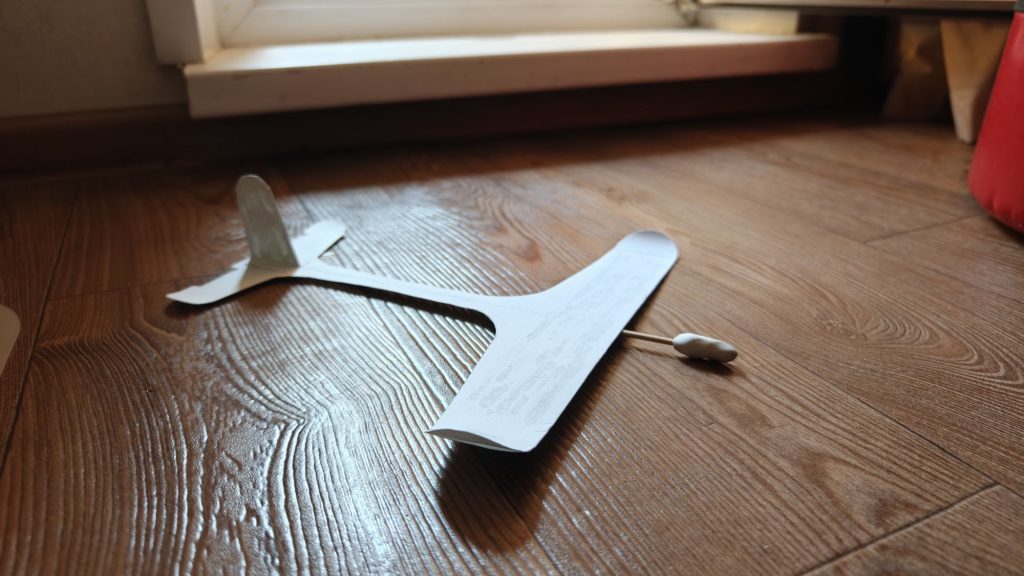
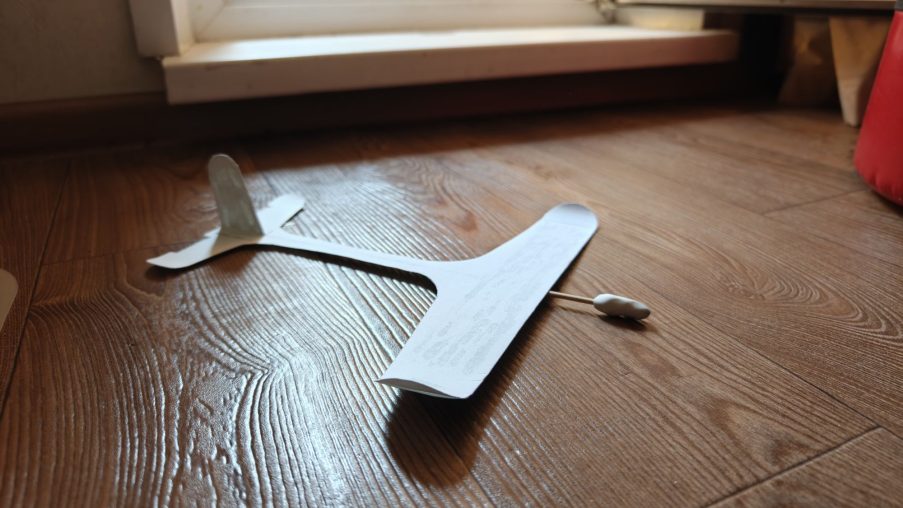
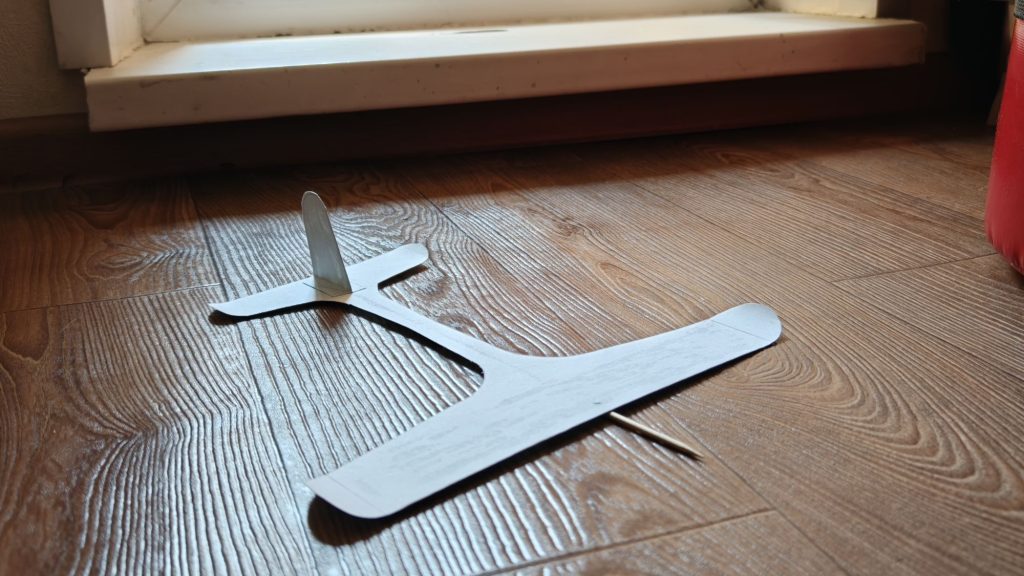
 The forward-swept wing design gives the model excellent stability and a fast gliding flight. The aircraft is based on a single-piece paper cutout with smooth transitions to the fuselage, which protects the paper from tearing during landings.
Materials needed:
Watercolor paper (1 sheet, A3 or A4 size)
Long bamboo skewer (30 cm)
Modeling clay for balancing
Ruler, pencil, scissors, and an empty ballpoint pen
1. Drawing and Single-Piece Template Cutout
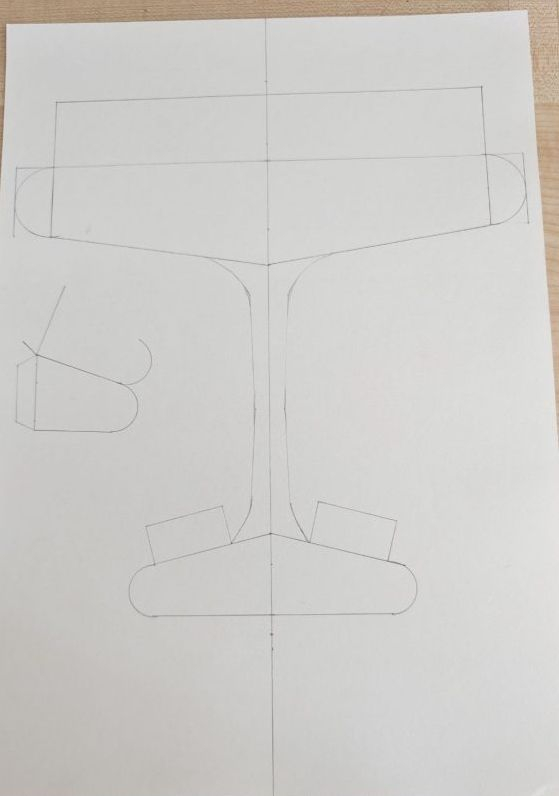
Mark the forward-swept main wing, the central fuselage strip, and the scaled-down tail stabilizer on the sheet.
Draw smooth rounded radii in the junction corners where the wing and tail meet the fuselage. This distributes structural load and eliminates air turbulence.
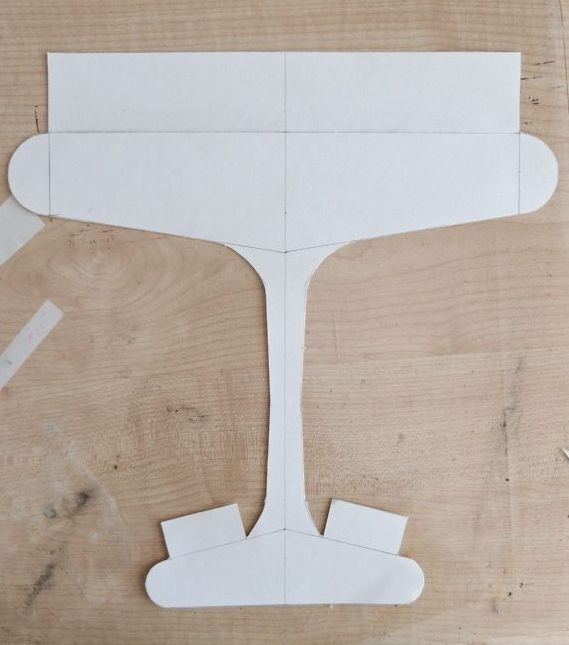
Cut out the entire blank in one piece along the outer contour.
2. Leading Edge Reinforcement
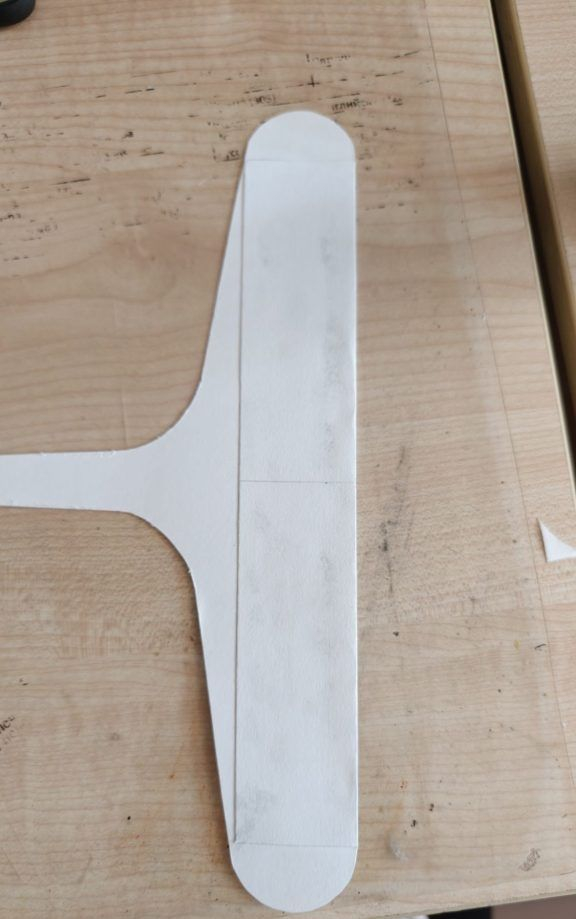
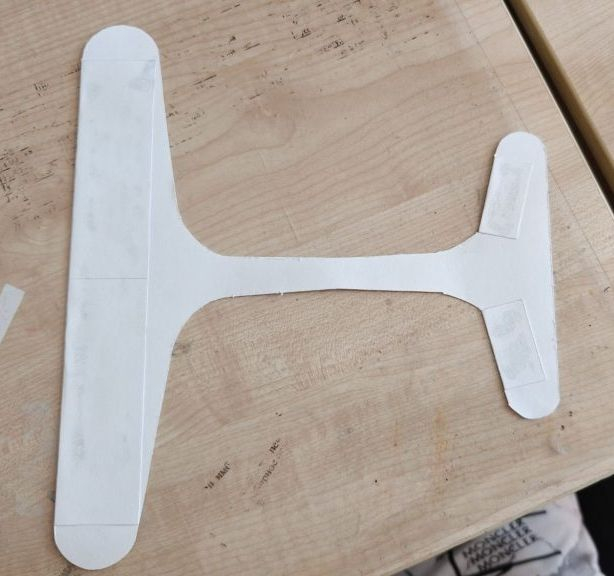
Score along the wing leading edge line using an empty ballpoint pen and a ruler for a clean fold.
Fold the 4 cm top flaps backward, coat them generously with glue, and press them firmly with a ruler.
This creates a solid two-layer spar that eliminates wing vibration in flight.
3. Installing the Main Longitudinal Spine
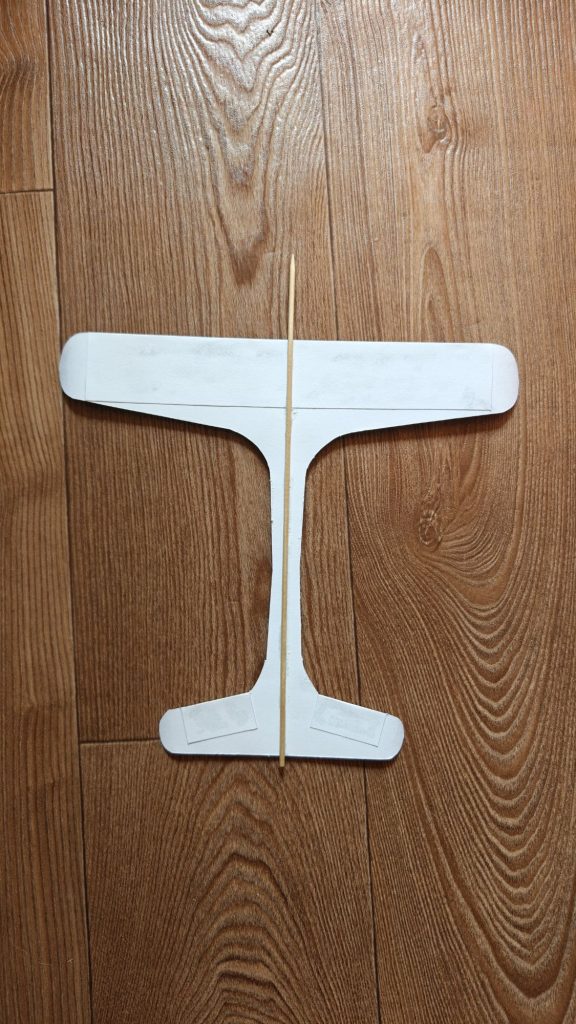
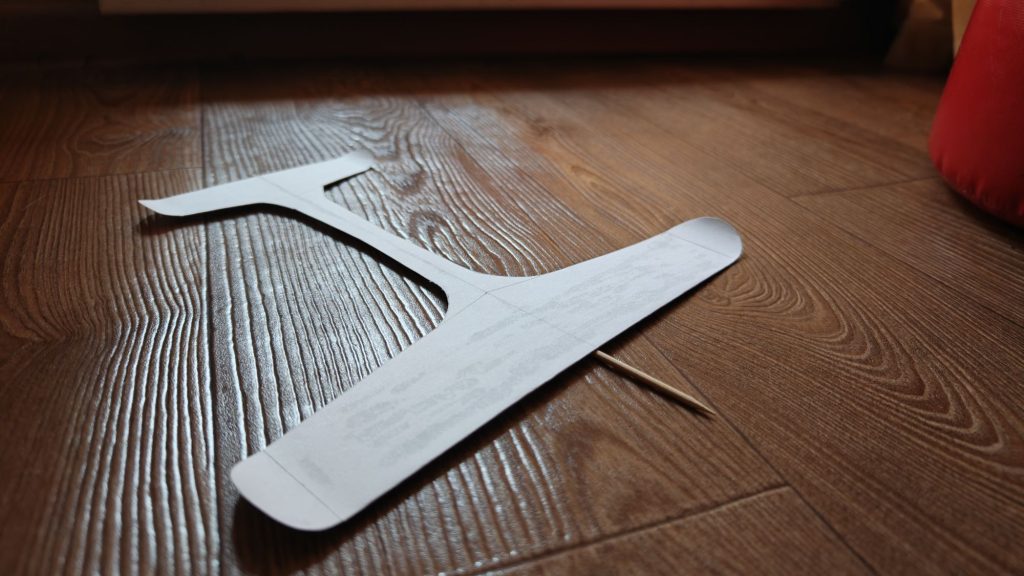
Draw a centerline on the underside of the glider.
Glue the bamboo skewer with superglue along the entire axis — from the nose through the fuselage to the edge of the tail.
Leave 3–4 cm of the skewer protruding at the front to mount the nose weight.
4. Vertical Fin Assembly and Mounting
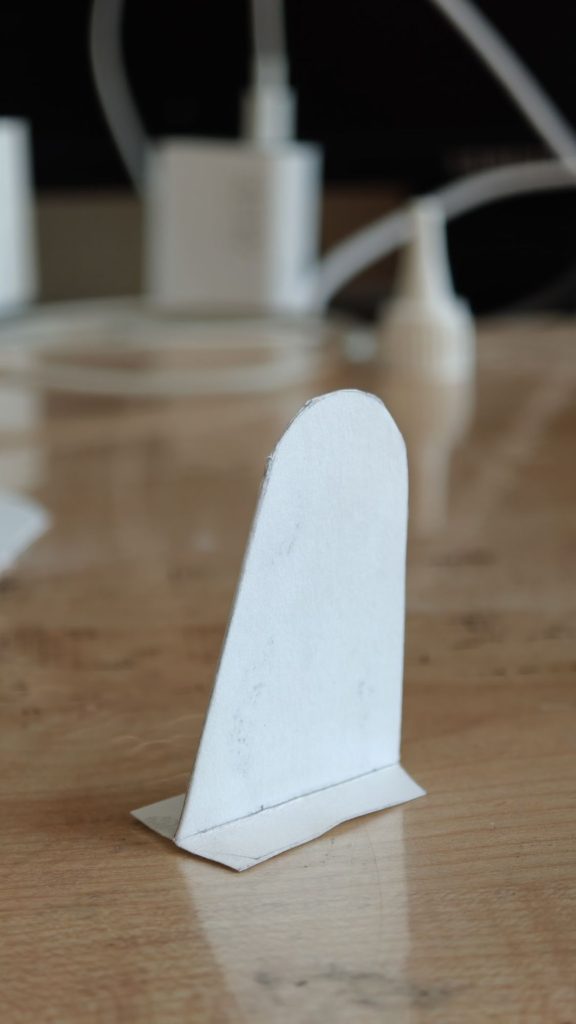
Cut out a double-layered fin piece with bottom mounting tabs bent outward in opposite directions.
Glue the side walls of the fin together.
Glue the fin tabs onto the center of the rear stabilizer, directly over the attached skewer.
5. Center of Gravity Adjustment and Launch Setup
Attach a small ball of modeling clay to the protruding front tip of the skewer.
Support the glider with your fingers under the front section of the main wing and adjust the clay weight until it achieves a perfectly horizontal balance.
If the glider dives steeply into the ground upon launch, reduce the weight of the clay on the nose.
If the glider pitches its nose up, loses speed, and stalls, add a little more clay to the nose.