
 Written by
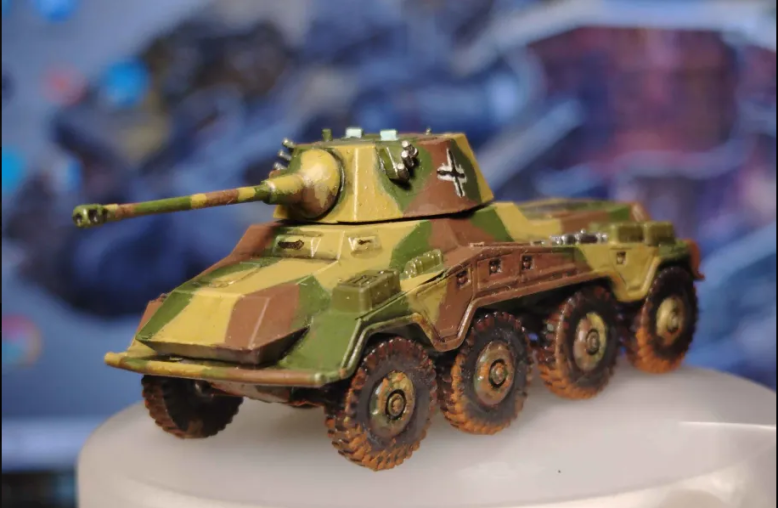
 In this article, I will share my experience painting the 1/100 scale Sd.Kfz.234/2 Puma model from Zvezda.
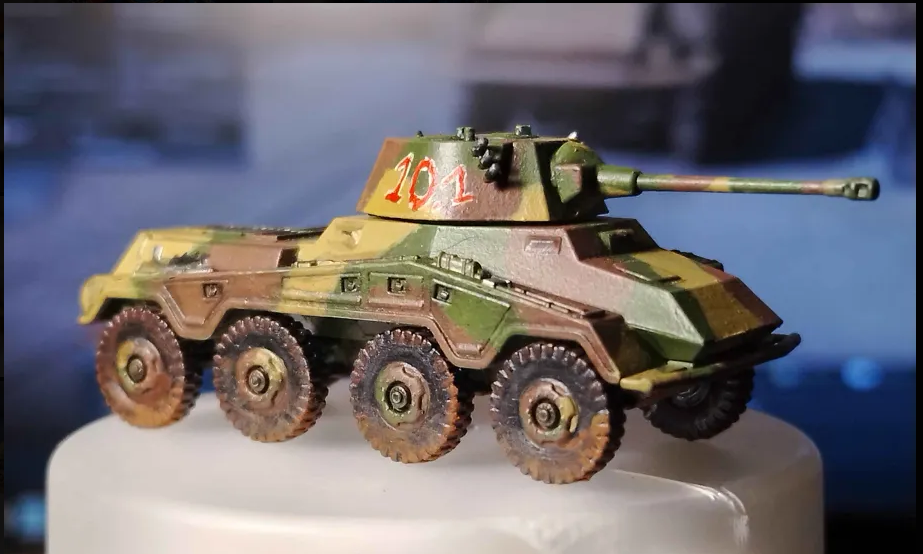
Painting 1:100 scale models is the best way for beginners to learn modeling for a number of reasons. Firstly, these models are quite affordable ($3-$6 each). Secondly, the model’s size makes it easier to practice, as your hand quickly tires with any movement. It’s also easier to find suitable tools for applying paint and bright colors. That’s why I decided to start with them (incidentally, the Puma is my seventh 1:100 scale model).
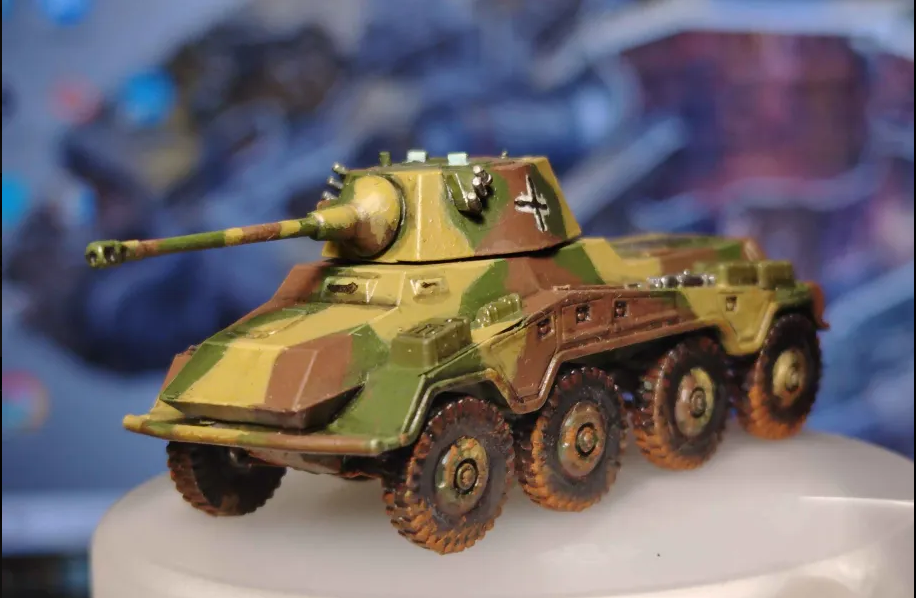 Before applying the necessary materials, it’s necessary to prepare the model’s surface. To do this, I sand the parts 2,000 times to create a rough surface. After painting all the parts, I soak them in soapy water with brushes (this removes plastic dust, fingerprints, and chemical residues from the casting process). After the model has dried, I begin priming it (Tamiya gray aerosol primer). From a distance of 30 cm, I spray a layer of primer over the entire surface of the model. Once the model is dry, I can begin painting.
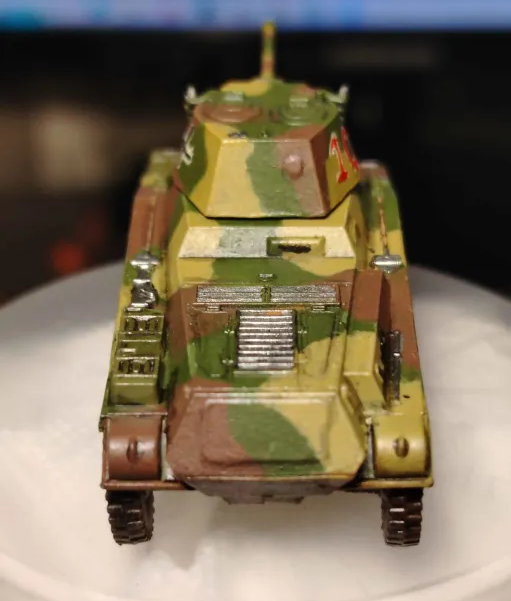 I use acrylic paints (base coat). I apply a green base coat in several layers. Then I apply camouflage patterns using German red-brown and yellow-olive paints, also in several layers, creating a pattern. I paint the wheels and metal parts (shovels, jacks, radiators) black. Then I apply silver paint. To create the effect, I use a black wash, running it through a model of the internal power source. I mix the base and white paint and go over the edges of the protrusions to highlight the model’s edges. I apply pigments to the seat to create characteristic dirt marks. I apply decals to the turret. And then I seal everything with varnish.
The model looks good, which gave me additional practice. This is also my first experience working with pigments.